

Winterize Your Denver Home: 5 Overlooked Fall Tasks That Can Prevent Costly Repairs

Get ahead of the first hard freeze

Next week’s cooler weather in Denver is the perfect window to winterize your home. Fall home maintenance is easier in the 60s than after the first hard freeze. A few small tasks now can prevent burst pipes, roof leaks and high heating bills later.

Most Denver homeowners know to change the furnace filter. Fewer know about the quick, little-known jobs that protect your home’s value the most. Here’s our Colorado winter home checklist, starting with the ones people skip.

Five little-known tasks that save big

  1. Disconnect your garden hoses. Many Denver homes have frost-free outdoor faucets. They only work if the hose is off. A connected hose traps water in the pipe, and that water can freeze and split the line inside your wall. You may not see the damage until spring, when the faucet runs and water leaks behind the drywall. Unscrewing the hose takes about ten seconds.
  2. Clear your furnace’s outdoor vent pipes. High-efficiency furnaces often vent through two white plastic pipes on the side of the house. Leaves, bird nests or drifting snow can block them. When that happens, the furnace may shut itself off. Find the pipes now and keep the area clear all winter.
  3. Water your trees in winter. This one surprises people. Denver winters are dry, and trees can lose moisture even while dormant. Colorado State University Extension recommends watering trees during dry winter stretches, on days above 40 degrees when the ground isn’t frozen. Mature trees add real curb appeal and value, and they’re expensive to replace.
  4. Find your main water shutoff before you need it. If a pipe bursts, every minute counts. Know where your main valve is, make sure it turns, and show everyone in the house. This is one of the easiest ways to keep a small leak from becoming a major insurance claim.
  5. Reverse your ceiling fans. Most fans have a small switch on the motor housing. Set them to spin clockwise on low speed. This gently pushes warm air from the ceiling back down into the room.

Outside: your fall home maintenance checklist

  • Schedule a sprinkler blowout. Do it before the first hard freeze. Water left in the lines can crack pipes and the backflow preventer, which is often the priciest part to replace.
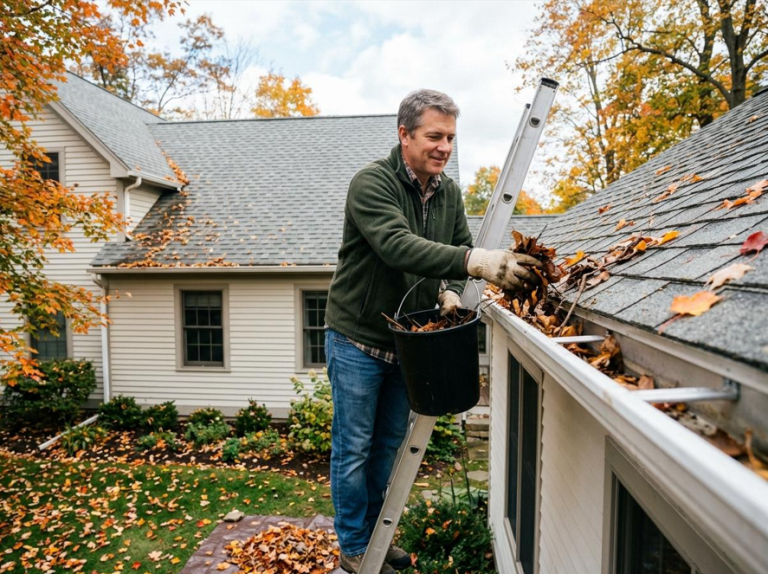
  • Clean gutters and extend downspouts. Clogged gutters can lead to ice dams on the roof. Downspouts should carry water several feet away from your foundation.
  • Walk the roof line. From the ground or with binoculars, look for missing or lifted shingles and damaged flashing. Small fixes now cost far less than leaks in January.
  • Seal gaps around the house. Caulk around windows, doors and spots where pipes or wires enter the home. These small gaps let in cold air and pests.
  • Replace garage door weatherstripping. If you can see daylight under the door, warm air is escaping. This matters even more if water lines run through garage walls.

Inside: get ready for Colorado winter

  • Service the furnace. Change the filter and book a tune-up with a licensed HVAC pro. A tech can catch small problems before your heat goes out on the coldest night of the year.
  • Test smoke and carbon monoxide detectors. Furnaces, water heaters and fireplaces all run harder in winter. Replace batteries and check expiration dates on the back of each unit.
  • Flush the water heater. Draining a few gallons from the valve at the bottom clears out sediment. That helps it heat more efficiently and can extend its life. Setting it to 120 degrees is a common recommendation that can also trim energy costs.
  • Clean the dryer vent. Lint buildup makes your dryer work harder and is a fire risk. Clean the full vent line, not just the lint trap.
  • Insulate exposed pipes. Foam pipe sleeves are inexpensive at any hardware store. Focus on pipes in crawl spaces, unheated basements and garages.
  • Check your fireplace. If you use a wood-burning fireplace, have the chimney inspected before the first fire.

Own rentals? Add these to your list

If you own rental property in Denver, one frozen pipe can mean repairs, a displaced tenant and lost rent all at once. A few extra steps help protect your cash flow.

  • Send tenants a winter reminder. Ask them to keep the heat on when they travel, disconnect hoses and report drafts or leaks right away. Include where the water shutoff is.
  • Plan for vacant units. Keep the heat on at a safe minimum temperature in any empty unit. Check it regularly during cold snaps.
  • Review your insurance. Confirm what your landlord policy covers for freeze damage and water damage, and what it requires from you to keep that coverage.
  • Book contractors early. HVAC techs, roofers and plumbers get busy once the cold hits. Scheduling now saves you from emergency pricing later.

Small tasks, protected equity

Your home is likely one of your biggest financial assets. Regular maintenance protects that value. Skipped maintenance shows up later in inspection reports, repair bills and negotiations when it’s time to sell or refinance. An afternoon of fall home maintenance this week can keep more of your equity where it belongs.

Curious what your home is worth heading into winter? Request a free home valuation from Michelle Glass and see how much equity you’ve built: 303-868-0011 · michelledirect@kw.com

This checklist is general information. For gas appliances, electrical work and roof repairs, use a licensed professional.