
Seth McConnell | Denver Business Journal
The Denver Broncos will stay true to the team’s name, announcing plans to build a new, privately funded stadium in the heart of the Mile High City.
In a joint letter with the city of Denver and state of Colorado, the Broncos confirmed the team’s preferred site for a new stadium is Burnham Yard, a 58-acre former railyard in Denver’s La Alma Lincoln Park neighborhood.
In mid-2024, several LLCs connected to law firms believed to be representing the Broncos began purchasing real estate near Burnham Yard, but the team had never confirmed that the railyard was a possible stadium site until Tuesday.
“With a storied history that predates Colorado statehood, Burnham Yard stands poised to be revitalized into a thriving development where sports & entertainment, housing, business and community blend to create a one-of-a-kind year-round destination,” the letter said. “Denver has been the proud home of the Broncos since Day 1. This community-inspired vision will allow our city and team to continue to grow and thrive together at Burnham Yard.”
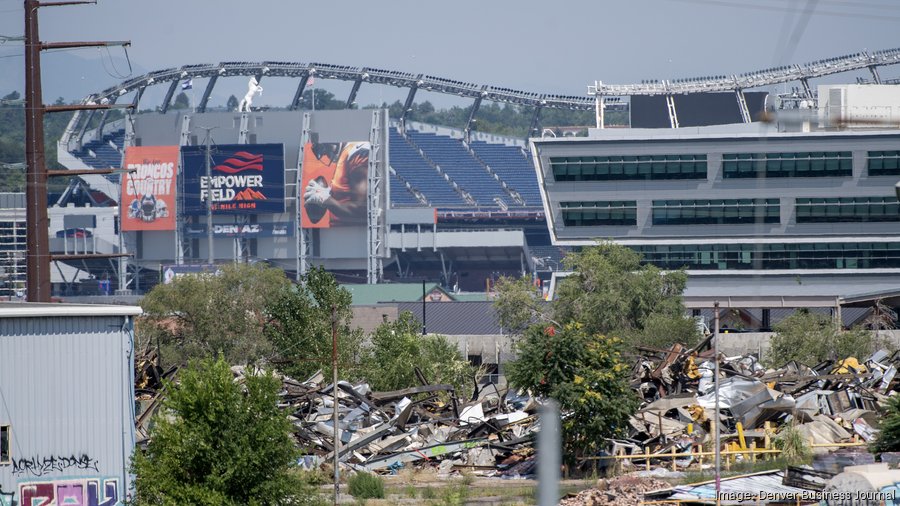
The target date for the new stadium to open is 2031. The Broncos’ lease on Empower Field at Mile High, on city-owned land where the team currently plays, ends in 2030.
In a video posted on social media, Broncos owner and CEO Greg Penner described the plan for the site as building both a new stadium and a “year-round destination,” indicating there will be aspects to the development other than a stadium.
“It’s not something that will just have a large parking lot all around it, but really creating some place that’s special that people leave and talk about and say, ‘Oh my gosh, when you come to Denver, you’ve got to be here at Burnham Yard,'” Carrie Walton Penner, one of the team’s owners, added in the video.
The team said in the letter that community discussions can now take place. The city added in an announcement that it will work to generate a Small Area Plan for Burnham Yard, which can include preferences for housing options, public infrastructure, parks and other amenities. Additionally, the team has committed to creating a Community Benefits Agreement with nearby neighborhoods.
“La Alma Lincoln Park looks forward to working with the Broncos towards a community benefits agreement that supports the goals of ours and surrounding neighborhoods,” Nolan Hahn, president of the La Alma Lincoln Park Registered Neighborhood Organization, said. Hahn added that Walton Penner reached out to him personally to let the RNO know about the plan, saying he was excited to work together on an agreement.
Denver City Councilwoman Jamie Torres, who represents the area, said in an announcement that she was optimistic about the potential the development could bring to the area.
“These neighborhoods are home to 13,000 residents, an incredible Art District, Business Improvement District, cultural and historic districts of homes and buildings that tell the story of Denver,” she said. “The news that the Broncos will name Burnham as their preferred site says they see the opportunity to contribute and integrate into already amazing communities in partnership with residents, community-based organizations, advocates in housing, mobility, culture, history, and more, and I look forward to this deep engagement.”
In the letter, the Walton-Penner ownership group confirmed it will privately fund the new stadium without any new taxes. When Empower Field was built, Colorado residents covered 75% of the cost through a 0.1% sales tax from 2001 to 2011. When the Broncos move out, Empower Field and the 80 acres of parking lots around the stadium will revert back to city ownership. The city said a planning process to determine the future of that site will begin in 2026.
“Today is a remarkable win-win-win for Denver,” Mayor Mike Johnston said in the city announcement. “The Broncos are staying in Denver, we will finally open up the historic Burnham Yard neighborhood for development, and we get to reimagine the Mile High Stadium site as a thriving community in West Denver.”
The joint letter indicated the stadium will have a retractable roof, an element required by the NFL in cities with cold weather that want to host the Super Bowl. Empower Field at Mile High does not have a roof.
The Colorado Department of Transportation currently owns Burnham Yard, having purchased the land from Union Pacific in 2021 for $50 million. Earlier this year, CDOT moved ahead with the removal of several historic buildings on the site in preparation for a sale. At the time, Historic Denver, a nonprofit dedicated to historic preservation in Denver, criticized the action. However, Historic Denver aims to work with the Broncos moving forward.
“Historic Denver is thrilled that one of Denver’s most recognizable organizations plans to relocate to one of the city’s most historic sites,” CEO John Deffenbaugh said. “Other sports facilities across the country show that the old and the new can go hand-in-hand and we are excited to see how designers rise to the challenge of integrating the existing historic Locomotive Shop into a state-of-the-art new facility.”
There are still a few remaining properties in the area that are not owned by CDOT and haven’t been purchased by a Broncos-connected LLC, including Denver Water’s campus. The agency’s new operations complex was completed in 2019.
In a statement, Denver Water said that for the stadium site to work, the agency will need to relocate some facilities to the south end of the complex. The administration building, where approximately 600 employees work, will stay put.
According to the statement, the Broncos and Denver Water have been in discussions about how to make things work for months. Public records have indicated that officials with Denver Water, the city of Denver and the Broncos officials met regularly for weeks earlier this year.
“We have committed to helping make Burnham Yard home of the new stadium, with the understanding that any impacted Denver Water facilities need to be fully replaced to the same high-quality standards, and at no expense to Denver Water’s ratepayers or adverse impacts to our operations,” Denver Water Board President Stephanie Donner said in the announcement.