




Spring is the perfect time to give your home a quick refresh—and the best part is, you don’t need a full renovation to make a big impact. These simple weekend projects can dramatically improve your home’s curb appeal and overall value.
 1. Add Fresh Mulch & Define Garden Beds
A fresh layer of mulch instantly makes your yard look clean and well-maintained. It also helps retain moisture and prevent weeds. Take it a step further by redefining the edges of your garden beds for a crisp, polished look.
 2. Power Wash for an Instant Refresh
Winter can leave behind dirt, salt, and grime. Power washing your driveway, walkway, siding, and even your fence can make everything look brand new in just a few hours.
 3. Upgrade Your House Numbers
This small detail makes a surprisingly big difference. Modern, easy-to-read house numbers add a sleek touch and improve visibility—especially important for guests and deliveries.
 4. Add Outdoor Lighting
Simple solar pathway lights or uplighting can elevate your home’s exterior and add a sense of warmth and security. It also helps your home stand out during evening hours.
 5. Plant Seasonal Flowers
Nothing says spring like fresh flowers. Add pops of color with planters near your front door or incorporate seasonal blooms like tulips and pansies into your landscaping.
 Why It Matters
First impressions matter—especially in real estate. Homes with strong curb appeal attract more interest, both from guests and potential buyers. These quick, affordable upgrades can make your home feel more inviting and well cared for.
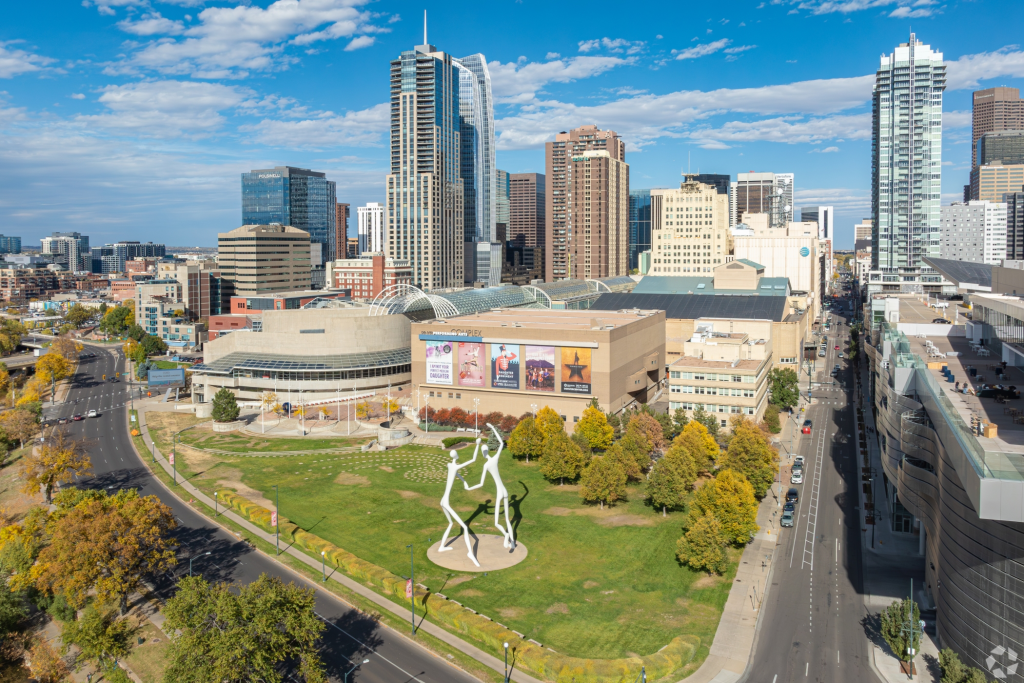
The median home sale price in Denver has fallen every month since October, and a surge in available apartments and landlord concessions may be playing an outsized role.
According to data from Homes.com, the residential affiliate of CoStar, Denver saw the largest February median sales drop in more than eight years — 4% to $575,000 — yet remains one of the most expensive housing markets in the nation, ranking ninth among the top 40 metropolitan areas. The median home price has dropped every month since October.
“Renting has become significantly more accessible in the past couple of years for most Coloradans,” Cooper Thayer, an agent with The Thayer Group in Denver, told CoStar News. “That creates a diminished demand for for‑sale housing.”
He explained that in Denver, it costs more each month to own a home than it does to rent one. In many parts of the metropolitan area, owning a home costs about 70% to 100% more than renting — a gap that has reshaped housing demand.
That difference has spurred apartment development and intensified competition among landlords, helping to ease pressure on rents.
CoStar data shows that the asking rent in the Denver metropolitan area is $1,795 per month, down 3.4% from the previous year. Rent growth has been under pressure for the past two years, largely due to a surge in new supply.
A record 18,000 apartments were completed in 2024, followed by another 12,200 units in 2025, according to the data.
More than 60% of properties contacted by CoStar’s research division reported offering some form of free rent in February — a level that has held steady since last fall and represents the highest concession usage on record in the Denver metropolitan area.
In supply‑heavy parts of the market, renters can now find leases offering up to 14 weeks of free rent on a one‑year term, though 10 to 12 weeks has become standard. That’s up sharply from the six to eight weeks of free rent typically offered a year ago.
The growing appeal of renting has also spilled over into the condo market.
According to Athena Brownson, with Compass in Denver, condos have been especially affected, as buyers weigh ownership costs against increasingly competitive rental options.
“The condo market in particular has taken a huge hit,” Brownson said. “Buyers want single‑family or even a duplex so they can enjoy outdoor space, and as the demand for single‑family increases, the demand for condos continues to decline and is absolutely causing condo prices to fall.”
Homes.com data shows Denver’s median condo price fell 9.7% year over year in February to $299,900. Condo sales were flat during the month, while inventory jumped 53.2% compared with a year earlier — the largest growth rate among property types.
“So, there is great opportunity out there for purchasing condos at great prices,” Brownson said, “but the buyer has to want that lifestyle.”
Thayer expects the broader housing market — including rentals — to remain stable heading into this spring.
He noted that activity on the for‑sale side remains strongest among homes that are priced correctly and well prepared, even as renters enjoy increased leverage.
“If there’s one thing that’s moving fast,” Thayer said, “it’s those well‑positioned, well‑priced, well‑presented listings that sellers and their brokers are being very strategic about how they’re presenting.”
“I’ve always said that Denver is a very resilient market when it comes to how we compare to other areas around the

The Federal Reserve of the United States held its benchmark interest rate unchanged on Wednesday for the second policy meeting of the year, signaling caution as officials weigh the economic fallout of the war in the Middle East.
The Fed approved holding rates steady by an 11-1 vote, with Governor Stephen Miran favoring a 25-basis-point cut at this meeting. Wednesday’s decision keeps the benchmark rate at 3.5% to 3.75% as policymakers saw no compelling reason to rush an additional rate cut, describing the unemployment rate as “little changed” since September and inflation still elevated.
The median projection from policymakers suggests lowering rates by a quarter point in 2026 and another quarter point in 2027, maintaining a prediction from a forecast released in December.
Some Fed officials have resisted further rate cuts, citing concerns that inflation is not moving back toward the Fed’s 2% target. In fact, inflation is running hotter than expected even before the conflict with Iran begins to show up in the data.
The war in Iran added a complication to an already difficult policy decision. The biggest surge in oil prices in four years, fueled by the renewed conflict in the Middle East, has reinforced officials’ reluctance to ease rates further.
“In the near term, higher energy prices will push up overall inflation, but it is too soon to know the scope and duration of the potential effects on the economy,” Powell said Wednesday at the press conference.
That energy shock is already showing up for consumers.
The national average price for regular gas is $3.842 per gallon, as of Wednesday, according to AAA, up from $2.923 a month ago and higher than a year ago, when that number sat at $3.078.
At the same time, the labor market has shown signs of strain, complicating the assessments of how a sustained oil shock might weigh on the broader economy.
“The economics effect could be bigger, they could be smaller, they could be much smaller or much bigger. We just don’t know,” Powell added.
Powell noted that inflation should show progress around the middle of this year as the impact of tariffs fades. Without that improvement, however, a rate cut would be less likely.
“The rate forecast is conditional on the performance of the economy. So if we don’t see that progress, then you won’t see the rate cut,” Powell said.
Four times a year, the Fed publishes what each official thinks interest rates should be in the future, based on their economic outlook and what they consider “appropriate” policy.
A majority of policymakers kept their projections unchanged from December, signaling one cut for 2026, according to the Fed’s well-known “dot-plot” visualization, which displays the spread of the midpoint of the target range for the federal funds rate.
In December, Fed official Jeff Schmid voted against cutting rates, a position shared by Fed official Austan D. Goolsbee. Stephan Miran, by contrast, wanted a larger cut. At this meeting, Miran again voted in favor of lowering rates by a quarter point.
Against that backdrop, Fed officials see the inflation rate at 2.7% by the end of 2026, higher than the December forecast of 2.4%. They also seem more upbeat, projecting the gross domestic product will rise to 2.4%, compared with 2.3% previously expected.
“The labor market is clearly not a source of inflationary pressures,” Powell said. “What we want to see for this year is continued progress for housing services, finally seeing goods inflation come back down” and “also get some help from nonhousing services.”
Even as Powell emphasized that inflation pressures remain concentrated outside the labor market, he acknowledged that some of the Federal Open Market Committee members discussed the possibility of a rate hike; however, “the vast majority of participants don’t see that as their base case.”
Powell reaffirmed his view that the economy isn’t marked by a combination of slow economic growth, high unemployment and high inflation.
“I would reserve the term ‘stagflation’ for a much more serious set of circumstances. That is not the situation we are in. What we have is some tension between the goals,” Powell said.
Various Fed watchers have chimed in lately with their own forecasts. Economist Peter Linneman said earlier this month during a live recording of a webcast hosted by Walker & Dunlop CEO Willy Walker that he predicted at least a 75-basis-point cut by year-end.
“In an environment where inflation runs above 2% for an extended period, it is entirely plausible that the Fed delivers no rate cuts in 2026,” EY-Parthenon’s chief economist, Gregory Daco, said in a statement earlier this month.
As of March 10, the estimated average tariff rate on all imports is 12%, according to Urban Institute and Brookings Institution’s Tax Policy Center.
“Fed Chair Jerome Powell has indicated that the effects of tariffs seem to be manifesting themselves as a one-time price hike — albeit stretched over a period of time — rather than as triggering systemic inflation that would need to be dealt with by the Fed,” Mike Kraft, commercial real estate treasurer for commercial banking at J.P. Morgan, said in a statement earlier this week.
“For now, markets continue to price in at least one rate cut for 2026, but the uncertainty will push any such action out till later in the year, with any reliable forecast open to question until and unless the Middle East conflict subsides,” he added.
Others contend implications from the geopolitical conflict on the American commercial real estate industry remain limited. Such situations typically affect the sector indirectly, through financial markets and macroeconomic conditions, rather than direct exposure, Cushman & Wakefield wrote in an insight earlier this month. The firm, however, noted that if higher energy prices push inflation upward and delay anticipated interest rate cuts, tighter financing conditions could weigh on capital markets’ activity in the near term.
Commercial real estate may even attract additional investor interest amid the conflict because of its income stability and diversification benefits, particularly if stocks, private credit or bonds turn more volatile, a Marcus & Millichap report from this month found.
“While the decision to hold rates comes as no surprise, there is a growing consensus that commercial real estate’s fundamentals remain sound — with some variability across asset classes — and still stymied by the gridlock of higher capital costs,” Marion Jones, a principal and the executive managing director of U.S. capital markets at Avison Young, said in an email to CoStar News.
“Much of the industry’s dry powder has shifted back toward core and core-plus strategies, yet little of it has actually been deployed. Additional rate cuts could unlock significantly more transaction activity and spur new investment. Until then, institutional investors will continue to be highly selective, while private capital swoops in more opportunistically,” she continued.
Christine Cooper, the chief U.S. economist for CoStar Group, agreed that the decision to maintain the policy rate was expected.
“Without greater clarity on the duration and conclusion of the military action in the Middle East, uncertainty persists about the extent to which global commodity markets will be disrupted and, ultimately, affect economic growth,” Cooper said.
Separately, Powell also briefly touched during the press conference on how the Fed does have its eye on the role artificial intelligence could play in its decision-making.
“In the short term, we’re building data centers everywhere, and that’s actually putting pressure on all kinds of goods and services that go into building these things, so that’s probably pushing inflation up at the margin,” Powell said at the press conference.
Meanwhile, the Bank of Canada held its policy interest rate on Wednesday.
Brad Case, Homes.com chief residential economist, said the housing market is showing signs of balance as inventory builds, but high mortgage rates continue to dampen buyer appetite.
The housing market is “a little bit stuck, but getting better as more inventory comes on the market … we just need buyers to be more willing to actually come to closure. And the mortgage interest rate volatility isn’t helping,” Case said.
That volatility was evident last week, when mortgage rates jumped to the highest level of the year.
The average contract rate on a 30‑year mortgage climbed 11 basis points to 6.30% in the week ended March 13, matching the prior week’s increase, according to data released Wednesday by the Mortgage Bankers Association. The rise in housing costs comes as the 10‑year U.S. Treasury yield has climbed sharply, driven by concerns that the war in Iran could reignite inflation pressures.
The Fed doesn’t directly set mortgage rates. Instead, it controls a short‑term rate that banks charge each other. When the Fed signals changes to that rate, it can influence longer‑term borrowing costs, including mortgages.
Case said those signals from the Fed often shape buyer sentiment as much as interest rate movements.
“It would not help the housing market, but the problem would be more psychological than financial,” Case said. “If the Fed signals more concern about inflation, then that will trickle down to home buyers and make them more hesitant about starting the process of getting a mortgage.”
Powell pointed to lagging price pressures as one reason for inflation being sticky — an issue that continues to affect households.
“There are areas where prices are still going up, like insurance, various different kinds of insurance are getting more and more and more expensive, and that’s just catching up really from inflationary pressures that take a while to get to the price,” Powell said.
Powell added that it will take “some years” for positive real-earnings gains to make people feel better again about their finances. While inflation-adjusted wages have risen for roughly three years, “people are not feeling good” about the cost of living.
The Federal Reserve has a chair, a nominee to replace him, and yet the path to a transition remains unsteady.
Jerome Powell, who has led the central bank since 2018, will see his four-year term as chair expire on May 15. But Kevin Warsh, the former Fed governor whom President Trump nominated in January to succeed Powell, has no Senate confirmation hearing date.
According to the government’s filings, Powell’s lawyer warned prosecutors that the president lacks the votes to replace him, Powell believes he can’t be forced out without undermining the Fed’s independence, and Powell would remain on the board if the investigation stayed open — though that position could change if the probe were dropped.
The investigation started in late 2025, when the U.S. attorney’s office opened a grand jury inquiry into whether cost overruns from the Fed’s headquarter renovation constituted fraud and whether Powell made false statements to Congress. Prosecutors said they sought to meet with the Fed in December but never received a response.
Powell said he won’t leave the Fed until the Justice investigation is over. And he will serve as “chairman pro temp” until his successor is named as the new chair of the Fed.
“I have no intention of leaving the board until the investigation is well and truly over with transparency and finality,” Powell said.
He has not, however, made a decision yet on whether he will serve out this term as a Fed board member through January 2028.
🏡 Mortgage Rates Update: Why Global Events Are Keeping Rates Elevated This Spring

As we head into the spring market, mortgage rates remain a key topic for both buyers and sellers—and lately, they’ve been heavily influenced by global events.
🌍 What’s Driving Rates Right Now?
Recent geopolitical tensions—particularly the ongoing conflict involving Iran—have had a direct impact on financial markets. Mortgage rates are closely tied to the bond market, and typically, uncertainty (like war) pushes investors toward safer assets like bonds, which can help bring rates down.
However, this situation is a bit different.
Because the conflict is affecting global energy supply routes, oil prices have surged. That creates inflation concerns, and inflation is one of the biggest drivers of higher interest rates.
👉 In simple terms:
Uncertainty alone → usually helps lower rates
Inflation fears → pushes rates higher
Right now, inflation is winning that battle.
📈 What the Fed and Markets Are Signaling
Markets have quickly adjusted expectations around the Federal Reserve.
Rate cuts that many expected earlier this year are now unlikely in the near term
Some projections even show a small possibility of rate hikes
Mortgage rates have climbed back above the mid-6% range as a result
Even though stocks have shown volatility, bond yields haven’t dropped enough to meaningfully improve mortgage rates—another sign that inflation concerns are outweighing “safe haven” demand.
⛽ Why Oil Prices Matter So Much
Energy prices play a huge role in inflation. With oil hovering at elevated levels:
Transportation and goods become more expensive
Inflation expectations rise
Interest rates tend to follow
Even if oil prices stabilize, markets are signaling that sustained higher energy costs could keep upward pressure on rates.
🏠 What This Means for Buyers & Sellers
For anyone watching the housing market:
For Buyers:
Rates may remain volatile and elevated in the short term
Waiting for a major drop may not be the best strategy right now
Opportunities still exist with negotiation, seller concessions, and refinancing later
For Sellers:
Buyer demand is still active, but more rate-sensitive
Pricing and positioning matter more than ever
Well-prepared listings are still moving—especially in desirable locations
🔮 The Outlook
If geopolitical tensions ease, we could see some modest improvement in rates—but a rapid return to the low rates of the past few years is unlikely in the near future.
For now, the market is balancing:
Inflation pressures
Global uncertainty
Federal Reserve policy
And that means mortgage rates may continue to fluctuate as new developments unfold.

📌 Bottom Line
Mortgage rates aren’t just about housing—they’re tied to the global economy. And right now, inflation driven by energy prices is the biggest force shaping where rates go next.

St. Patrick’s Day is around the corner, and there are plenty of ways to celebrate across the Denver & Boulder area — whether you’re looking for family fun or a festive night out.
🍀 Denver St. Patrick’s Day Parade
Saturday, March 14 • 9:30 AM • Downtown Denver
One of the largest St. Patrick’s Day parades in the country! Expect floats, marching bands, Irish dancers, and lots of green spirit. A fun (and free!) way to kick off the season.
🐶 Boulder St. Patrick’s Day Puppy Parade
Early–Mid March • Downtown Boulder
A local favorite! Dress up your pup in green and enjoy a lighthearted parade and costume contest. Perfect for families and dog lovers.
🍺 Denver St. Patrick’s Day Bar Crawl
March 14 & March 17 • Downtown Denver
Celebrate with themed drink specials, live music, and festive vibes at participating bars throughout downtown.
🍀 Local Irish Pubs to Visit
If you prefer something more low-key, these spots are known for great St. Paddy’s Day celebrations:
Nallen’s Irish Pub (Downtown Denver)
The Irish Rover Pub (South Broadway)
Scruffy Murphy’s (LoDo)
The Celtic on Market (Downtown)
Clancy’s Irish Pub (Wheat Ridge)
Enjoy a local event, grab a green beer, and then come home to a place you love. 🍀🏡
If you’re curious what your home might be worth this spring — or thinking about making a move in 2026 — we’re always happy to run a quick equity check.

Retro decor has been experiencing a major resurgence in the last few months, adding a splash of nostalgia to everything from kitchen cabinets to bathroom design. When you think of retro bathrooms, chances are you picture floral print wallpapers and salmon pink tiles. While these iconic features are making an updated comeback (spoiler alert!), experts say nostalgic decor classics are returning in a more stylish form.
“Retro bathroom trends are returning in an updated and refined way, with an emphasis on warmth, texture, and balance,” says bathroom design expert Daniel Siegel. From colorful terrazzo to skirted sinks and small-format tiles, what’s old is new again. “When paired with clean lines, thoughtful lighting, and modern details, these retro touches feel timeless rather than trendy,” Siegel shares. Here are the eight biggest retro bathroom trends that are back in style, according to designers.

There is something inherently charming about console sinks with tailored fabric skirting. If you love the vintage-inspired look, you’ll be happy to hear that designers say it’s back. “Skirted sinks introduce texture, movement, and a softer visual language,” says interior designer Thecla Glueck. Beyond their charm, the design expert highlights their practicality. “They discreetly conceal storage and reinforce the idea of the bathroom as a thoughtfully designed room, not just a utilitarian space,” she says.
“Terrazzo is everywhere again, and not just on floors—we’re seeing it on shower walls, vanities, even integrated sinks,” says bathroom design expert Jill Siegel. The expert shares that the retro material is playful, durable, and visually interesting without being too precious. Plus, it’s taking on a more modern look these days. “The newer versions feel more refined—larger aggregate, softer color palettes, or very controlled contrast,” Siegel says.

“Retro bathrooms are gaining momentum heading into 2026, and tiled bathrooms are a big part of that,” says design expert Lindsay Fluckiger. As homeowners crave more personality in their homes, retro-inspired tiles are a great way to add character and a touch of nostalgic charm. “The 4×4-inch size tile, for example, offers that quiet throwback feeling without becoming overly vintage, and we’ve seen that come back,” Fluckiger says.
Colorful bathroom fixtures are the retro trend making a big splash in bathroom design right now. “Sinks, tubs, and even toilets in soft pinks, greens, and muted yellows are making a comeback,” Siegel says. There is one difference according to the experts, however: restraint. “When all the fixtures are in the same tone and paired with clean tile and modern hardware, it feels designed—not retro for the sake of it,” the expert shares.

Patterned wallpaper was once a key tool for adding personality to bathrooms, and because what’s old typically becomes new again, the retro look is making an updated comeback. “Layered thoughtfully, retro and vintage-inspired patterns bring intimacy and warmth, transforming the bathroom into a cocooning retreat rather than a purely functional environment,” Glueck says.
Additionally, she’s noticing the return of tile in classic patterns. “Checkerboard in classic black and white marble or jewel-tone checks, small geometric shapes such as penny rounds or hexagon, pastel mosaics, floral, or softly faceted subway, are returning with a more restrained, contemporary lens,” Glueck shares. When these retro features are balanced with more modern fixtures and used within a disciplined color palette, the designer says they deliver utmost charm.

Daniel and Jill Siegel share that retro-inspired oval and rounded mirrors are showing up again in bathroom design. “They’re an easy way to add character without committing to something permanent like tile or color,” they say. When the rest of the bathroom feels calm, oval and rounded mirror shapes contribute to the overall design in a subtle and pleasant way according to the pros.
Interior designer R. Jane Morgan says retro bathrooms were known for being fun, colorful, and “unabashedly unafraid of playing with colorful tile combinations.” If you’re a fan of playful colors and a little bit of whimsy, the good news is that some of these bold color pairings are making a comeback.
“Salmon pink with black accents and butter yellow with navy are some examples of retro combos that are making their way back into bathrooms that are over and done with all white,” Morgan says. She predicts the coming year will see high-impact tile selections. “2026 will also see bathrooms shed any shyness when it comes to tile selections: look for bold colors in great color combinations,” she says.

Warm wood tones were a staple in retro bathrooms, and experts see them making an upgraded return this year. “Warm wood tones—especially walnut and white oak—are being used to soften bathrooms again,” Siegel says. It you want to soften and warm up the space, incorporate warm woods through a bathroom vanity, open shelves, or integrated panels.

If you love the retro look but don’t want to commit to something as permanent as floor tile or as expensive as a bathtub, changing your lighting is a great way to add some retro flair. “Globe sconces, simple brass or black finishes, and lighting that feels more decorative are replacing harsh overhead fixtures,” Siegel says. It’s a great way to give a nod to vintage style and create a layered lighting plan so you can adjust how the space feels from day to night.

An architecture firm with deep roots in Denver is playing a key role as the Denver Broncos look to build a new stadium at Burnham Yard in the heart of the city.
Perkins&Will is leading small area planning efforts, which account for the infrastructure needed to turn Burnham Yard from an abandoned rail yard into a working neighborhood.
The company was hired to work on the area years ago, when the Colorado Department of Transportation bought the land. The city of Denver wanted to figure out what zoning would work in the area, what could be built there and how a transit-oriented development could spring from an entirely industrial area.

Things changed when the Denver Broncos stepped in several years ago. Instead of a general private development, the team at Perkins&Will found itself considering a stadium with an entertainment district.
“We were like, hey, this may actually turn into a very significant land owner of not only the old rail yard, but some of the properties around it,” said Stephen Coulston, principal with Perkins&Will. “We’ve been going through a really involved community engagement process.”
In a press conference on Jan. 28, Broncos owner Greg Penner said the team is listening closely to that process.
“We think that we will create something that is going to be special for the city of Denver and the state of Colorado,” Penner said. “We also understand that when you take on a project of this scale, there is going to be a lot of different opinions, and we have to take those in and then come up with the right solution.”

It’s far from the first time Perkins&Will has developed creative design processes and planning solutions for a project in Denver. Since its formation in 1962, the firm that would eventually bear the Perkins&Will name has helped make many significant structures in the area a reality.
Along the way, it’s become a national expert in sports, recreation and civic work — expertise it’s using on the Burnham Yard project and harnessing to grow its health care and urban design practices.
Originally called Charles S. Sink & Associates when it was founded 64 years ago, the firm was known as Sink Combs Dethlefs for most of its existence.
It worked on several structures important to sports and entertainment in the Denver area, such as the 115,000-square-foot Pat Bowlen Fieldhouse in Englewood, which opened in 2014, and the University of Colorado Boulder’s Folsom Field expansion. Sink Combs Dethlefs also designed Magness Arena at the University of Denver and built McNichols Arena, which was the home of the Denver Nuggets from 1975 through 1999 before being demolished.

A flagship project for Sink Combs Dethlefs was the Red Rocks Museum and Visitor Center, which added concessions, bathrooms and a welcome center to the iconic music venue built by the Civilian Conservation Corps in the 1930s and completed in 1941.
“Our design solution was to go underground so that we wouldn’t disturb the natural beauty of the place,” said Jennifer Stephens, a principal who has worked at the firm for 35 years. “It’s a very Denver solution, especially to such a beautiful, natural spot.”
Stephens said she went to the library to research old photographs when the Red Rocks project began. She still takes pride in the design, joking that her family gets annoyed at her discussing the history of the music venue every time they attend a concert.

Sink Combs Dethlefs merged with Chicago-based Perkins&Will in 2017. Perkins&Will is now celebrating 90 years as a company with the Denver branch contributing to more than 60 years of that history.
Perkins&Will honors history in many of its projects, including the firm’s work to restore the Sussex and Buerger Bros. buildings in downtown Denver’s Larimer Square. The firm’s own office, in the 1927 Rainbow Building, is an example of adaptive reuse. Stephens said her grandparents danced there when it was used as a music venue.

Ernest Joyner, principal and managing director of Perkins&Will’s Denver office, has been with the organization for several decades, including back when it was Sink Combs Dethlefs. Joyner said the merger in 2017 hasn’t impacted the dedication and character of the group’s practice.
“When we joined Perkins&Will, everything just became even more elevated in terms of expertise. It brought in lots more resources and practice areas,” Joyner said. “We like to call ourselves the smallest big firm, because it still feels like that.”
Since the acquisition, the firm has continued to shape big projects in Denver, such as the National Western Center Equestrian Arena. The firm is contributing to urban planning efforts for the future of Ball Arena as well, firm leaders say.
While remaining a global resource for sports design, Perkins&Will’s Denver office is expanding its urban design practice.
The Burnham Yard plan is one element of that practice. Perkins&Will is a subcontractor for HDR, which is overseeing the city’s planning efforts for the infrastructure around the stadium, according to previous Denver Business Journal reporting.
The small area plan attached to the Burnham Yard project covers 820 acres, according to Coulston, who is helping lead the firm’s planning work.
Coulston said the project is what brought him to Denver after years working for Perkins&Will in Austin.

“When we were talking about the small area plan for Burnham Yard, it had more to do with the fact that the state had acquired the railroad,” Coulston recalled, adding that only recently did his team learn about the Broncos’ plans.
Perkins&Will’s role is to help with community engagement and ensure the various planning efforts for the site are cohesive to create a transit-oriented development.
“We’re trying to all synchronize all of these pieces together in terms of thinking about the bigger picture around mobility,” Coulston said.
Along with expanding the local urban design practice, Perkins&Will is growing its aviation, science and technology and health care practices. Mackenzie McHale, associate principal for health, is building out a team for health care work, having moved over from HKS Architects in the last year along with several of her team members.

McHale said Perkins&Will is currently focused on metro Denver and hopes to help expand rural Colorado health access in the future.
“Every time I’m in a new facility or treatment center, I really feel closer and closer to the tribulations that they have to deal with,” McHale said. “From a design perspective, I know how to show up better and better every time.”
The company is also focusing on health by leading the development of a “Red List” of materials that are toxic or otherwise harmful while encouraging builders and designers to use more sustainable alternatives, Joyner said. Additionally, the firm sets aside a certain number of hours per year to provide pro-bono planning and design work to local nonprofits.
Stephens said those practices are what make Perkins&Will stand out.
“It’s really our commitment to creating places that better their communities,” she said. “So much of architecture is about the communities that it serves. And if you get that wrong, then you’ve not served the community, you’ve not served the client, you haven’t done anything that a good architect should be doing.”
Correction/clarification: A story highlight was updated to clarify Perkins&Will’s role in the development around the future stadium at Burnham Yard.


There’s finally a little good news for anyone who’s been priced out or sitting on the sidelines.
Buying a home is getting more affordable.
Monthly payments have started to come down, and the squeeze buyers have been feeling for the past few years is slowly loosening. Now, that doesn’t mean everyone can suddenly afford a home, but with how tough the market’s been, the improvement we’re seeing matters.
One of the best ways to see this shift is by looking at how much of a household’s income it takes to buy a home.
According to Zillow, housing is typically considered affordable when it takes 30% or less of your monthly income to cover your expenses. That includes your mortgage payment, taxes, insurance, and basic maintenance.
For the past few years, the math was well above that threshold, and it made buying a home unachievable for many. But now, we’re slowly moving back toward a balance. Zillow research shows it’s taking less of a typical household’s income to buy a home than it did just a few years ago (see graph below):

Now, we’re not all the way back to Zillow’s threshold of 30% of your income or less, so affordability is still tight. But things are trending in the right direction.
So, what’s driving the change? A lot of the focus lately has been on mortgage rates and how much they’ve come down over the course of the past year. But that’s not the only factor working in favor of buyers right now. Here are three trends benefiting buyers today:
1. Mortgage rates have eased. Rates are near their lowest level in more than three years, which helps lower monthly payments (see graph below):

2. Home price growth has cooled. Prices aren’t falling nationally, but they’re growing much more slowly than they were a few years ago. That means buyers today aren’t facing the same sharp jumps in purchase prices, which helps keep monthly payments more manageable – and buying more predictable.
3. Wages are growing faster than home prices. This one matters a lot. As Mark Fleming, Chief Economist at First American, explains:
“When income growth exceeds house price growth, house-buying power improves—even if mortgage rates don’t decline meaningfully.”
None of this makes buying cheap, but it does explain why the math is starting to work a little better for buyers than it did even a just a year ago. Put simply, the forces that hurt affordability over the past few years are finally easing. Fleming again explains it well:
“Affordability remains challenging, but for the first time in several years, the underlying forces are finally aligned toward gradual improvement. Mortgage rates may drift down only slowly, but income growth exceeding house price appreciation will provide a boost to house-buying power — even in a higher-rate world. Affordability won’t snap back overnight, but like a ship finally catching a steady tailwind, it’s now sailing in the right direction.”
These three factors combined are why economists expect affordability to keep improving in 2026.
But how much is affordability really going to improve? In some places, noticeably. Zillow says some markets are expected to fall back under their affordability threshold (30% of your income or less) by the end of the year:

But that doesn’t mean you have to be in one of these markets or wait until year-end to buy. Other places are already seeing big improvements in affordability. So, talk to a local agent about what’s happening in your market. You may find you’re able to buy after all.
For the first time in quite a whole, affordability is easing. That’s a meaningful shift.
And because this improvement isn’t happening everywhere at the same speed, understanding what’s changing locally is what really makes a difference. If you want to see how these trends show up in your area, talk with a local real estate agent.

It doesn’t get more classic than dinner (well, maybe if you throw in a movie too, but that’s so played out by now). Whether you want a quiet, candlelit dinner, are looking to spice things up with some live jazz, or want to keep it super lowkey at a casual spot, there are plenty of options to choose from.
The Post Chicken & Beer – For a casual holiday, skip the fancy tasting menu and head to The Post Chicken & Beer, where you’ll find Valentine’s specials sure to please. What’s more romantic than a heart-shaped box of hand-breaded chicken tenders? Pair it with The Post’s black velvet cake for the ultimate feast.
STK Steakhouse – Spice things up this Valentine’s Day at STK Steakhouse with special menu features. STK will offer 6 oz. wagyu filet, Wagyu fried rice with egg on top, Imperia Kaluga caviar, and more. Reservations can be made here.
Kona Grill – Make this Valentine’s Day extra sweet at Kona Grill with specials like The Perfect Pair surf & turf with a 6 oz. filet and lobster tail, Molten lava cake, Passion-rita, and more! Make reservations here.
Ultreia – This year, indulge in Valentine’s Day the week before, the weekend after, or on February 14th. Choose your favorites from the regular menus, or enjoy Valentine’s dishes specially crafted by the culinary teams for the occasion to create lasting memories with your loved one. Place your reservation here.
Frasca Food & Wine – Celebrate San Valentino with an unforgettable dining experience at Michelin-starred Frasca Food and Wine. Choose from three nights – Friday 2/14, Saturday 2/15 and Sunday 2/16 – to indulge in a romantic tasting menu. Place your reservation here.
Sunday Vinyl – Let Sunday Vinyl set the stage for an unforgettable Valentine’s experience on Friday 2/14 and Saturday 2/15. Indulge in a swoon-worthy tasting menu from chef Cody Cheetham paired with the warm, sultry tones of all-vinyl playlists. Make your reservation here.
Thirsty Lion – Choose from two prix fixe meals at Thirsty Lion (priced at $49 and $60 PP). Items include Black Cherry BBQ Pork Tenderloin, Parmesan Panko Crusted Halibut, Chocolate Porter Brownie, and more. Place your reservations here.
Saverina – Chef Christian Graves and his team have created a mouthwatering Italian-inspired menu for $95/person that includes Roasted Beet Salad, Hearty Vegetable Lasagna, Grilled Prime Filet, Red Velvet Cheesecake, and more. Reservations can be made here.
Ajax Downtown – This Valentine’s Day, the newly opened Ajax Downtown in Denver’s Union Station neighborhood is serving a special 3-course prix fixe menu ($95/person) that ignites all the senses. Sparks are sure to fly as nearly every item on Ajax’s menu incorporates open flame from the Josper grill. Make your reservation here.
The Kitchen – The Kitchen will be offering a prix fixe menu at only $99.50/pp with an optional $39.50/pp wine pairing. Enjoy grilled lobster tail, scallops, venison medallions, black forest gateau, and more! Make your reservations here.
Mizuna – This Valentine’s Day, let Mizuna sweep you off your feet with an unforgettable evening of culinary romance. For $215 per person, indulge in a multi-course meal designed to delight and surprise you and your special someone. Place your reservations here.
Luca – Luca opened 22 years ago on Valentine’s Day, and maybe that’s why you can taste so much love in every bite! Celebrate with Crab Agnolotti, Lobster-Tomato Sugo, 10 oz Ribeye, and more for only $95pp. Make reservations here.
Halcyon/Local Jones – Successful dates start with an engaging atmosphere, and when you spend your Valentine’s Day at Local Jones, you’re one step closer. So, Grab someone you love and get ready for a Valentine’s Day Dinner you won’t forget. Reservations can be made here.
Que Bueno Suerte – Que Bueno Suerte is celebrating Valentine’s Day with a deal you can’t pass up. For $80 you’ll get an appetizer, two entrees, dessert, and champagne. That’s pretty awesome.

Sometimes, you want to keep it extra simple: just you and your partner, sitting across from one another, sharing a few drinks. Or maybe you want to cheers one or two before heading to dinner. Whatever your plans, these places should be part of them. Make sure to check out our Best Speakeasies Guide for even more ideas.
Cooper Lounge – Celebrate your besties with specialty cocktails, gorgeous views, and giveaways at Cooper Lounge. Customize your evening with optional flower add-ons from Beet & Yarrow and desserts from Baumé. Make your reservation here.
Wynkoop Brewing Co. – Celebrate Valentine’s Day with a charming evening at Wynkoop Brewing Co., Denver’s first brewpub. Located in the heart of the LoDo neighborhood, Wynkoop offers the perfect blend of history, charm, and delicious craft beer.

There’s more to Valentine’s Day than just dinner – or at least there can be if you want to make it an extra memorable time. You’ll find many things to do around the city from small craft nights to whole markets to get you feeling the love.
Snarf’s & Snarfburger BOGO Valentine’s Day – Buy a sandwich or burger and get a second of equal or lesser value for free if you show you follow Snarf’s or Snarfburger on Instagram!