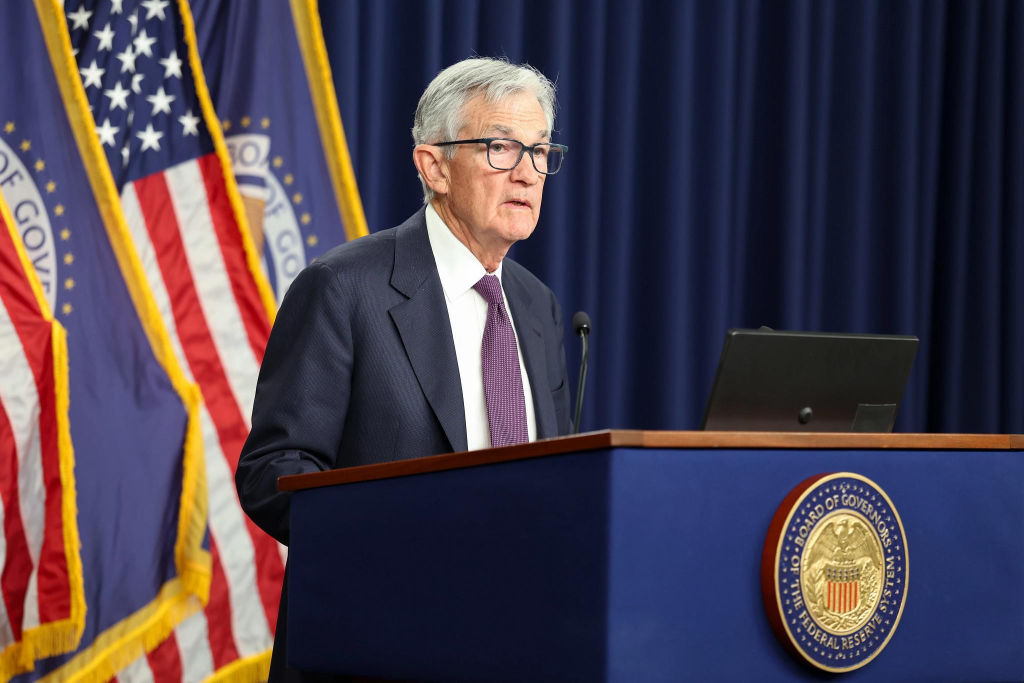
The Federal Reserve of the United States held its benchmark interest rate unchanged on Wednesday for the second policy meeting of the year, signaling caution as officials weigh the economic fallout of the war in the Middle East.
The Fed approved holding rates steady by an 11-1 vote, with Governor Stephen Miran favoring a 25-basis-point cut at this meeting. Wednesday’s decision keeps the benchmark rate at 3.5% to 3.75% as policymakers saw no compelling reason to rush an additional rate cut, describing the unemployment rate as “little changed” since September and inflation still elevated.
The median projection from policymakers suggests lowering rates by a quarter point in 2026 and another quarter point in 2027, maintaining a prediction from a forecast released in December.
Some Fed officials have resisted further rate cuts, citing concerns that inflation is not moving back toward the Fed’s 2% target. In fact, inflation is running hotter than expected even before the conflict with Iran begins to show up in the data.
The war in Iran added a complication to an already difficult policy decision. The biggest surge in oil prices in four years, fueled by the renewed conflict in the Middle East, has reinforced officials’ reluctance to ease rates further.
“In the near term, higher energy prices will push up overall inflation, but it is too soon to know the scope and duration of the potential effects on the economy,” Powell said Wednesday at the press conference.
That energy shock is already showing up for consumers.
The national average price for regular gas is $3.842 per gallon, as of Wednesday, according to AAA, up from $2.923 a month ago and higher than a year ago, when that number sat at $3.078.
At the same time, the labor market has shown signs of strain, complicating the assessments of how a sustained oil shock might weigh on the broader economy.
“The economics effect could be bigger, they could be smaller, they could be much smaller or much bigger. We just don’t know,” Powell added.
Powell noted that inflation should show progress around the middle of this year as the impact of tariffs fades. Without that improvement, however, a rate cut would be less likely.
“The rate forecast is conditional on the performance of the economy. So if we don’t see that progress, then you won’t see the rate cut,” Powell said.
Four times a year, the Fed publishes what each official thinks interest rates should be in the future, based on their economic outlook and what they consider “appropriate” policy.
A majority of policymakers kept their projections unchanged from December, signaling one cut for 2026, according to the Fed’s well-known “dot-plot” visualization, which displays the spread of the midpoint of the target range for the federal funds rate.
In December, Fed official Jeff Schmid voted against cutting rates, a position shared by Fed official Austan D. Goolsbee. Stephan Miran, by contrast, wanted a larger cut. At this meeting, Miran again voted in favor of lowering rates by a quarter point.
Against that backdrop, Fed officials see the inflation rate at 2.7% by the end of 2026, higher than the December forecast of 2.4%. They also seem more upbeat, projecting the gross domestic product will rise to 2.4%, compared with 2.3% previously expected.
“The labor market is clearly not a source of inflationary pressures,” Powell said. “What we want to see for this year is continued progress for housing services, finally seeing goods inflation come back down” and “also get some help from nonhousing services.”
Even as Powell emphasized that inflation pressures remain concentrated outside the labor market, he acknowledged that some of the Federal Open Market Committee members discussed the possibility of a rate hike; however, “the vast majority of participants don’t see that as their base case.”
Powell reaffirmed his view that the economy isn’t marked by a combination of slow economic growth, high unemployment and high inflation.
“I would reserve the term ‘stagflation’ for a much more serious set of circumstances. That is not the situation we are in. What we have is some tension between the goals,” Powell said.
Various Fed watchers have chimed in lately with their own forecasts. Economist Peter Linneman said earlier this month during a live recording of a webcast hosted by Walker & Dunlop CEO Willy Walker that he predicted at least a 75-basis-point cut by year-end.
“In an environment where inflation runs above 2% for an extended period, it is entirely plausible that the Fed delivers no rate cuts in 2026,” EY-Parthenon’s chief economist, Gregory Daco, said in a statement earlier this month.
As of March 10, the estimated average tariff rate on all imports is 12%, according to Urban Institute and Brookings Institution’s Tax Policy Center.
“Fed Chair Jerome Powell has indicated that the effects of tariffs seem to be manifesting themselves as a one-time price hike — albeit stretched over a period of time — rather than as triggering systemic inflation that would need to be dealt with by the Fed,” Mike Kraft, commercial real estate treasurer for commercial banking at J.P. Morgan, said in a statement earlier this week.
“For now, markets continue to price in at least one rate cut for 2026, but the uncertainty will push any such action out till later in the year, with any reliable forecast open to question until and unless the Middle East conflict subsides,” he added.
Others contend implications from the geopolitical conflict on the American commercial real estate industry remain limited. Such situations typically affect the sector indirectly, through financial markets and macroeconomic conditions, rather than direct exposure, Cushman & Wakefield wrote in an insight earlier this month. The firm, however, noted that if higher energy prices push inflation upward and delay anticipated interest rate cuts, tighter financing conditions could weigh on capital markets’ activity in the near term.
Commercial real estate may even attract additional investor interest amid the conflict because of its income stability and diversification benefits, particularly if stocks, private credit or bonds turn more volatile, a Marcus & Millichap report from this month found.
“While the decision to hold rates comes as no surprise, there is a growing consensus that commercial real estate’s fundamentals remain sound — with some variability across asset classes — and still stymied by the gridlock of higher capital costs,” Marion Jones, a principal and the executive managing director of U.S. capital markets at Avison Young, said in an email to CoStar News.
“Much of the industry’s dry powder has shifted back toward core and core-plus strategies, yet little of it has actually been deployed. Additional rate cuts could unlock significantly more transaction activity and spur new investment. Until then, institutional investors will continue to be highly selective, while private capital swoops in more opportunistically,” she continued.
Christine Cooper, the chief U.S. economist for CoStar Group, agreed that the decision to maintain the policy rate was expected.
“Without greater clarity on the duration and conclusion of the military action in the Middle East, uncertainty persists about the extent to which global commodity markets will be disrupted and, ultimately, affect economic growth,” Cooper said.
Separately, Powell also briefly touched during the press conference on how the Fed does have its eye on the role artificial intelligence could play in its decision-making.
“In the short term, we’re building data centers everywhere, and that’s actually putting pressure on all kinds of goods and services that go into building these things, so that’s probably pushing inflation up at the margin,” Powell said at the press conference.
Meanwhile, the Bank of Canada held its policy interest rate on Wednesday.
Brad Case, Homes.com chief residential economist, said the housing market is showing signs of balance as inventory builds, but high mortgage rates continue to dampen buyer appetite.
The housing market is “a little bit stuck, but getting better as more inventory comes on the market … we just need buyers to be more willing to actually come to closure. And the mortgage interest rate volatility isn’t helping,” Case said.
That volatility was evident last week, when mortgage rates jumped to the highest level of the year.
The average contract rate on a 30‑year mortgage climbed 11 basis points to 6.30% in the week ended March 13, matching the prior week’s increase, according to data released Wednesday by the Mortgage Bankers Association. The rise in housing costs comes as the 10‑year U.S. Treasury yield has climbed sharply, driven by concerns that the war in Iran could reignite inflation pressures.
The Fed doesn’t directly set mortgage rates. Instead, it controls a short‑term rate that banks charge each other. When the Fed signals changes to that rate, it can influence longer‑term borrowing costs, including mortgages.
Case said those signals from the Fed often shape buyer sentiment as much as interest rate movements.
“It would not help the housing market, but the problem would be more psychological than financial,” Case said. “If the Fed signals more concern about inflation, then that will trickle down to home buyers and make them more hesitant about starting the process of getting a mortgage.”
Powell pointed to lagging price pressures as one reason for inflation being sticky — an issue that continues to affect households.
“There are areas where prices are still going up, like insurance, various different kinds of insurance are getting more and more and more expensive, and that’s just catching up really from inflationary pressures that take a while to get to the price,” Powell said.
Powell added that it will take “some years” for positive real-earnings gains to make people feel better again about their finances. While inflation-adjusted wages have risen for roughly three years, “people are not feeling good” about the cost of living.
The Federal Reserve has a chair, a nominee to replace him, and yet the path to a transition remains unsteady.
Jerome Powell, who has led the central bank since 2018, will see his four-year term as chair expire on May 15. But Kevin Warsh, the former Fed governor whom President Trump nominated in January to succeed Powell, has no Senate confirmation hearing date.
According to the government’s filings, Powell’s lawyer warned prosecutors that the president lacks the votes to replace him, Powell believes he can’t be forced out without undermining the Fed’s independence, and Powell would remain on the board if the investigation stayed open — though that position could change if the probe were dropped.
The investigation started in late 2025, when the U.S. attorney’s office opened a grand jury inquiry into whether cost overruns from the Fed’s headquarter renovation constituted fraud and whether Powell made false statements to Congress. Prosecutors said they sought to meet with the Fed in December but never received a response.
Powell said he won’t leave the Fed until the Justice investigation is over. And he will serve as “chairman pro temp” until his successor is named as the new chair of the Fed.
“I have no intention of leaving the board until the investigation is well and truly over with transparency and finality,” Powell said.
He has not, however, made a decision yet on whether he will serve out this term as a Fed board member through January 2028.



 1. Add Fresh Mulch & Define Garden Beds
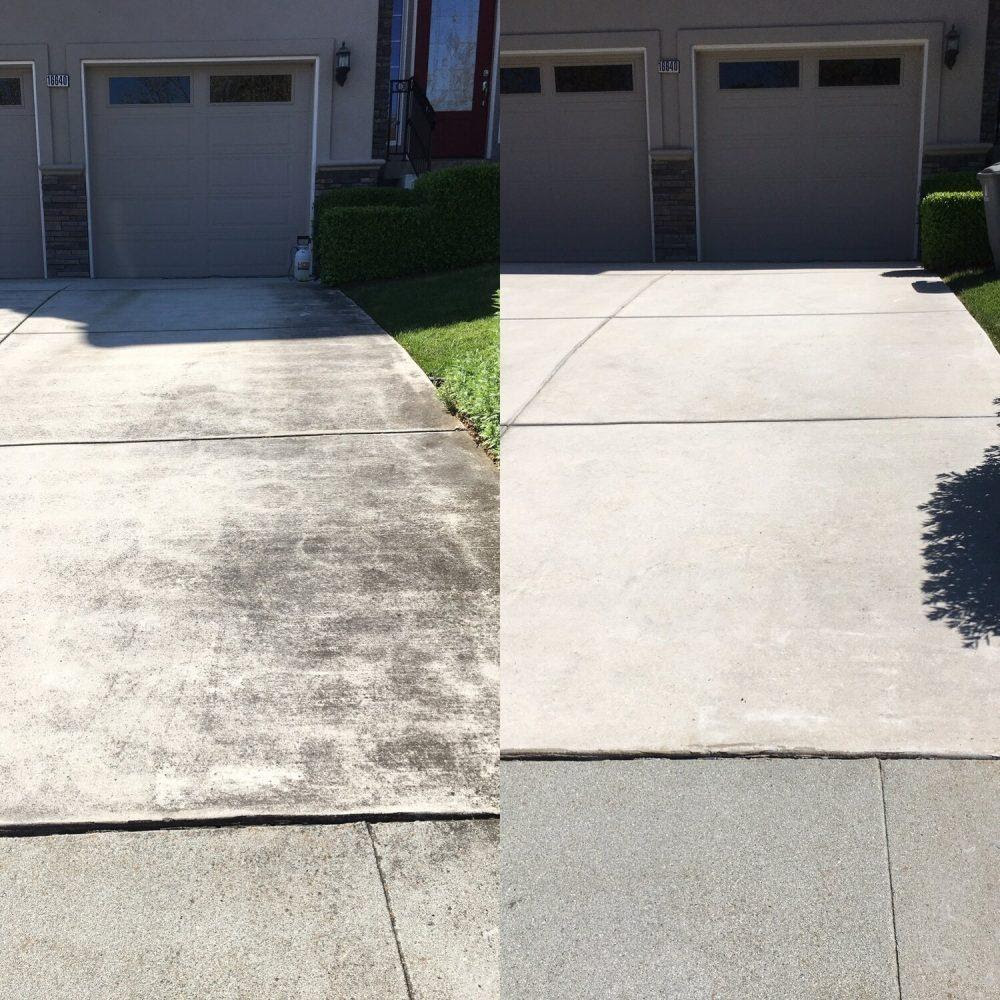
 2. Power Wash for an Instant Refresh
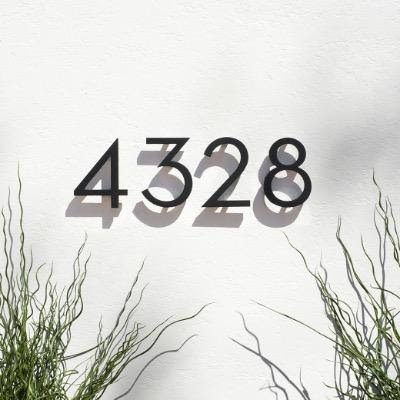
 3. Upgrade Your House Numbers
 4. Add Outdoor Lighting
 5. Plant Seasonal Flowers
 Why It Matters